Drip tape has achieved rapid development alongside drip irrigation technology in China, making it essential to gain a thorough understanding of this product. Drip tape is mainly categorized into two types: labyrinth inline drip tape and emitter-inlaid drip tape, which are applied for distinct working conditions respectively. Meanwhile, this article elaborates on the manufacturing equipment and extrusion forming technologies adopted by manufacturers during drip tape production.
Drip tape delivers water to crop roots for localized irrigation via small holes or emitters on about 10mm thin plastic tubes. Tiny outlets enable water to drip slowly and evenly into soil around plant roots drop by drop.
As an efficient water-saving irrigation method for arid regions, drip tape reaches up to 95% water utilization rate. It saves more water and boosts crop yields better than sprinkler irrigation; fertilizers can be applied along with water to double fertilizer efficiency.
It suits fruit trees, vegetables, cash crops and greenhouses, and also field crops in dry areas. A main drawback is easy clogging of emitters, so raw water needs strict filtration. Domestic production equipment is mature now, so drip irrigation is worth promoting in qualified areas.
Two main types: labyrinth drip tape (crescent & Great-Wall style labyrinths) and inlaid emitter drip tape. Standard diameter: Φ16; Φ8 labyrinth drip tape is non-standard. Common wall thickness: 0.16, 0.18, 0.20, 0.22, 0.24 mm. Standard hole spacing: 200 mm / 300 mm for labyrinth type; custom spacing available for inlaid type.
Φ8 specs: Great-Wall labyrinth flow 2.7 L, chain labyrinth flow 3.4 L. Φ16 flow rate: 2.2~2.4 L, water uniformity error ≤5%~10%.
Application: Sugarcane, cotton, chili, potato, ground nut, onion, banana, strawberry, flower and other vegetables; for surface & subsurface irrigation.
Flat emitters are fixed inside the tape tube as one piece, widely used for greenhouses and field cash crops.
Avoid sunlight focusing via water drops. Level soil before sowing to remove pits. Keep soil clods, stones and weeds from propping up film, which causes water pooling and lens effect to burn the tape. Bury drip tape slightly underground to prevent scorch damage.
Features
Application
Specifications
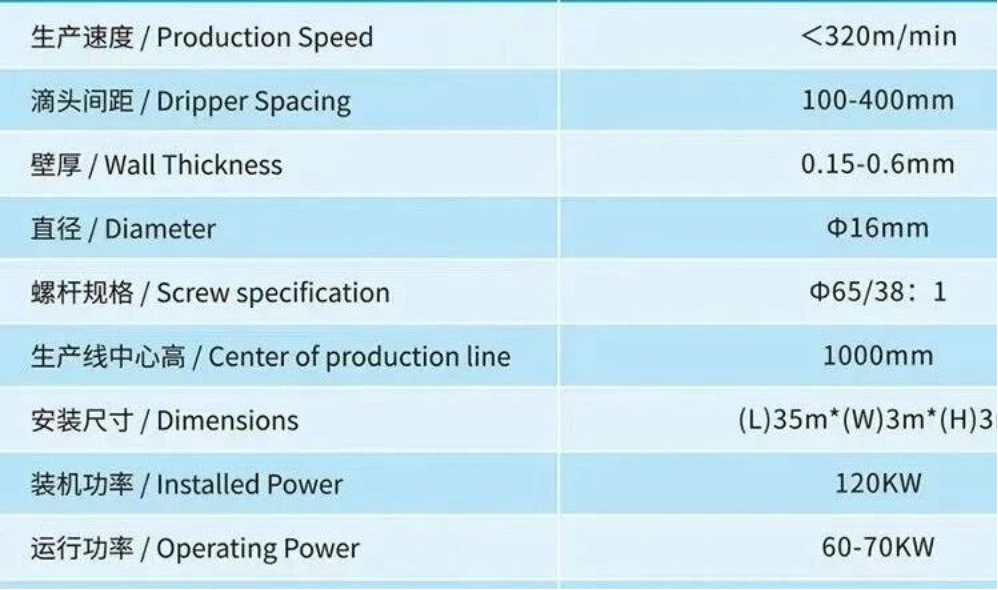
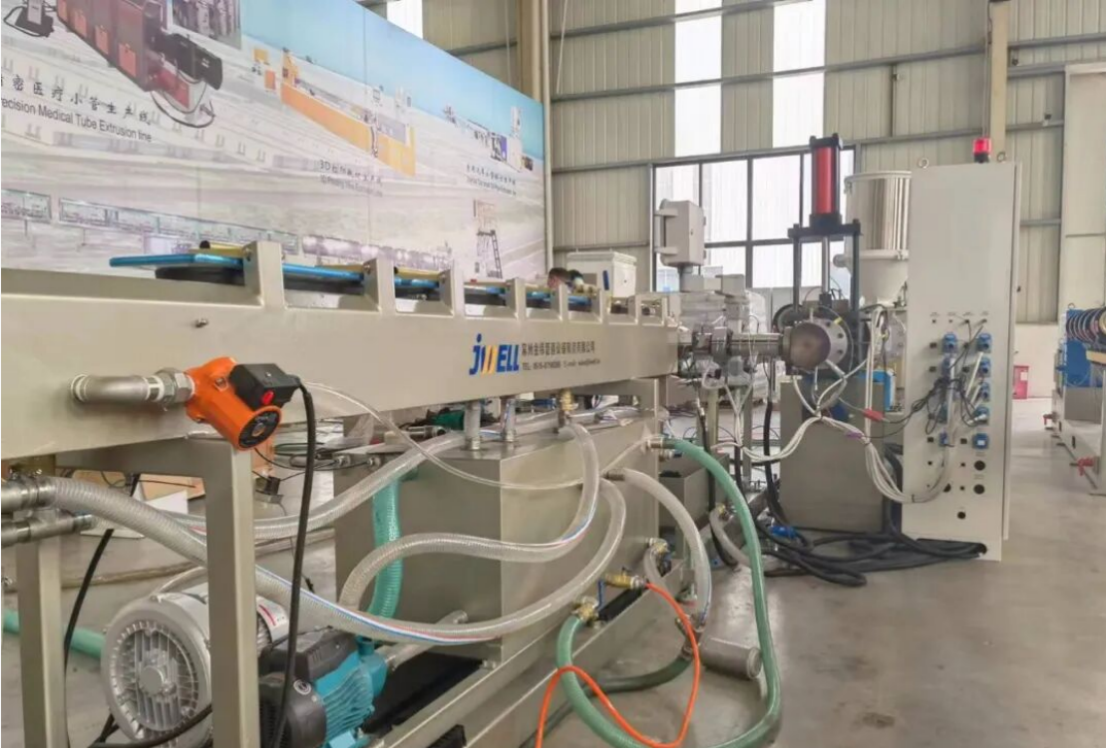
Drip tape production line mainly consists of single-screw extruder (main machine), auxiliary machines and winder. The single-screw extruder is composed of five core parts: drive unit, feeding system, barrel, screw, die head & mould.
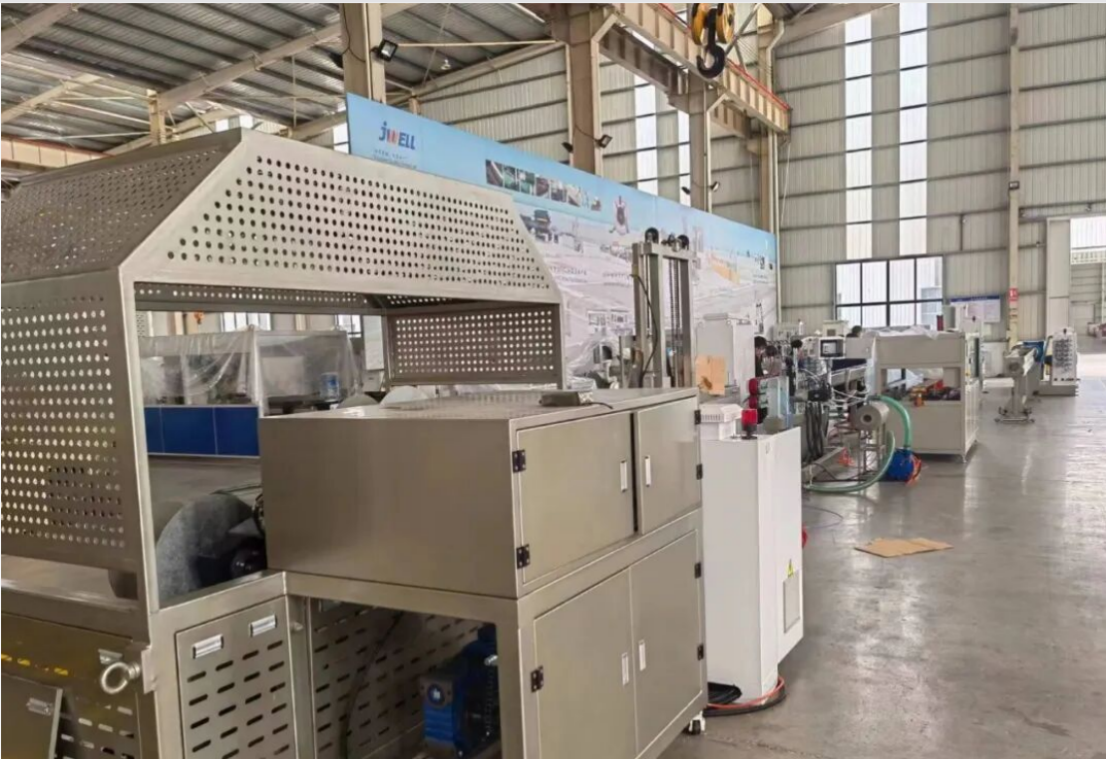
JWELL’s new-generation inlaid emitter drip tape production line has finished commissioning and is ready for official launch. Customers are warmly welcome to visit our factory for on-site inspection

