
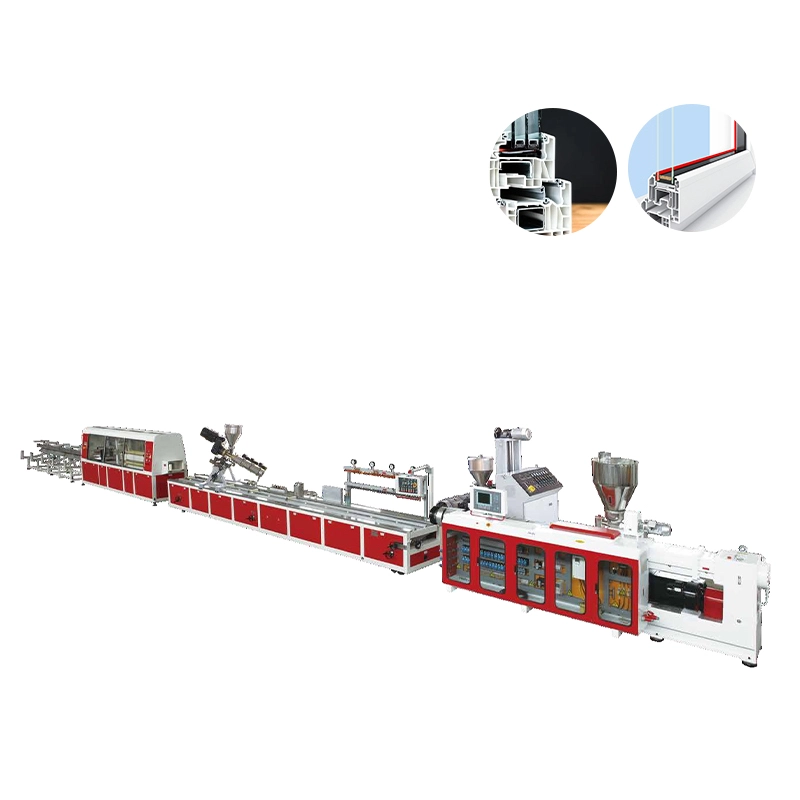
JWELL PVC windows High Speed Profile Extrusion Line
High-speed PVC profile extrusion line for door and window sections, foam profiles and micro-foam sheet. Send the model and quantity for a quote.
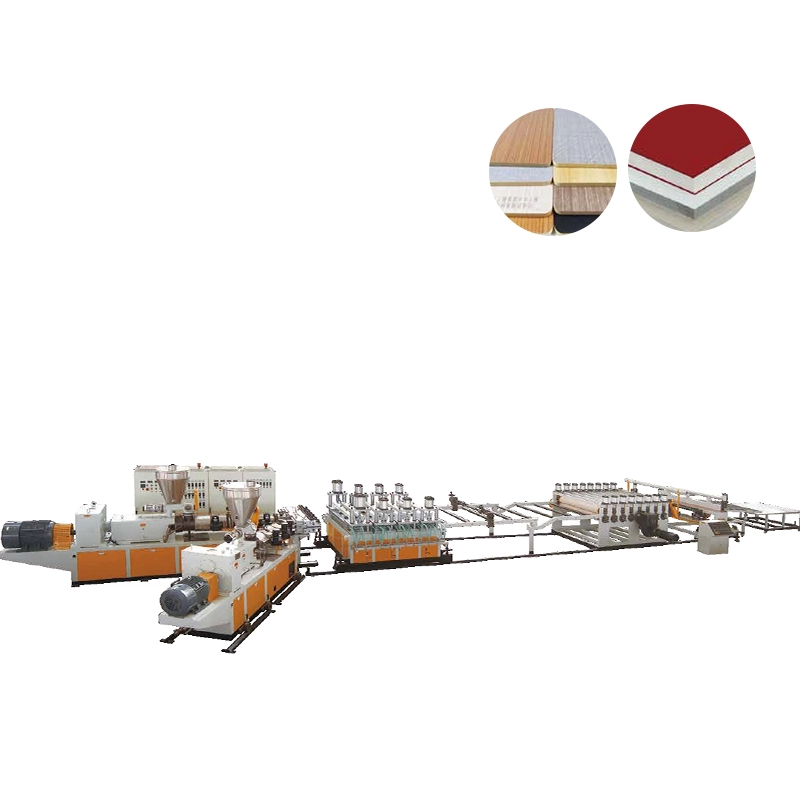
View productBuilt by one of the longer-established extrusion machine manufacturers, this line produces skinning (WPC) foamed board for construction formwork, packaging and automotive panels. When you compare pvc foam board extrusion line manufacturer offers, three things separate them: which extruder set drives the line, how the melt is plasticized, and how the board is cooled after the die. This page works through all three, then puts the two line configurations side by side.
Three steps decide whether the board leaves the line flat, hard-surfaced and inside tolerance. Everything downstream of the die is a consequence of these three.
PVC compound and foaming agent are fed into the extruder, where the screw melts, mixes and pressurises the compound into a homogeneous melt.
As pressure drops at the die, the foaming agent expands into a cellular core. Free foaming technology paired with precision dosing keeps that cell structure even.
The outer surface is set against the calibrator while the core stays cellular, then staged cooling locks in flatness and thickness tolerance across the full board width.
A denser outer skin over a foamed core. On this line the stated surface hardness sits between crust foaming and free foaming — harder than free foam, without the weight of solid board.
The material foams throughout the section, giving the lowest density and lightest board, but a softer surface that takes less handling and abrasion before it marks.
Two extruders — SJZ65/132 and an SJZ80/156 — build a layered board, so the surface layer and the core can be specified separately in one pass.
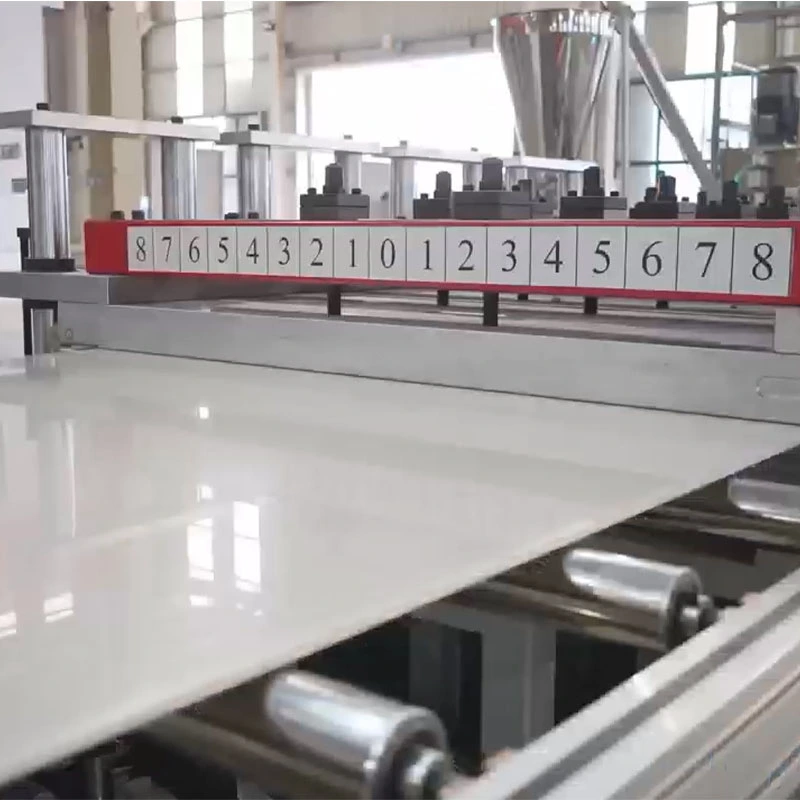
Melt homogeneity is set before the die is reached. An uneven melt produces uneven cells, and uneven cells show up as variable surface hardness on the finished board.
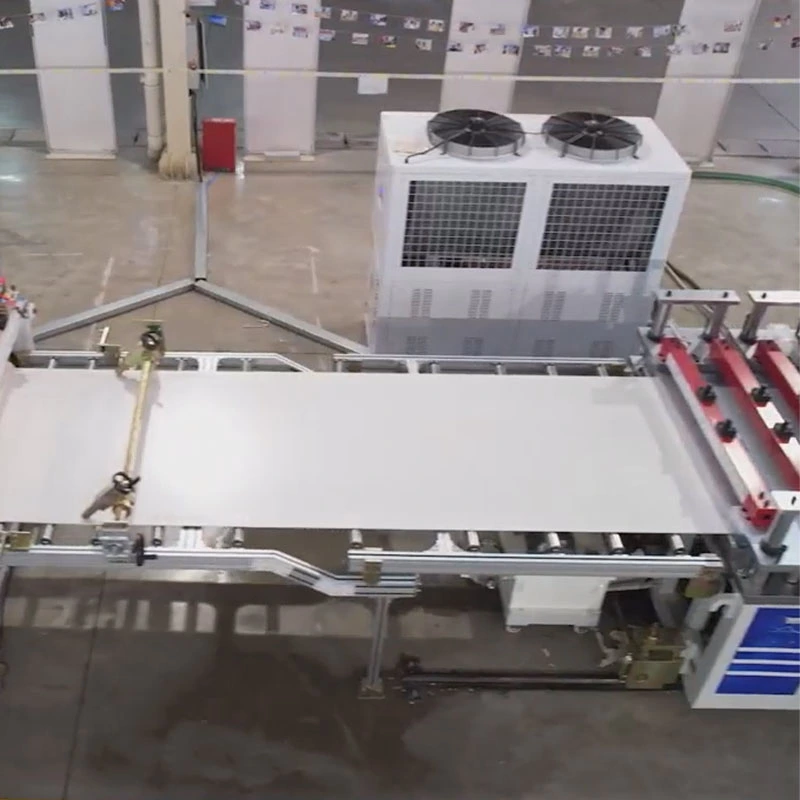
A foamed board is not flat when it leaves the die — it becomes flat while it cools. Cooling is a staged sequence, not a single step, because the skin and the core set at different rates.
The melt leaves the die at full section and the foaming agent begins to expand. Die head geometry is what fixes the initial shape.
The board is sized to its final width and thickness — anywhere from 1220 mm to 1600 mm wide and 3 mm to 30 mm thick on this line.
Graduated temperature zones set the skin progressively while the core finishes cooling, holding flatness across the full width.
Only once the section is dimensionally stable is the board pulled and cut; thickness and density adjustments are made here between formats.
The skin sets before the core has finished shrinking. The board bows, thickness drifts across the width and the surface can sink — and a board that leaves the line out of tolerance cannot be recovered by any later step. This is why the cooling sequence, not the die, is usually what limits how fast a line can be pushed.
Width and thickness coverage is identical across both builds. The differences sit in the extruder set, the maximum capacity and the main motor power — which is where the choice is actually made.
| Parameter | Skinning foaming board extrusion line | Co-extrusion foamed board extrusion line |
|---|---|---|
| Products width (mm) | 1220–1600 | 1220–1600 |
| Products thickness (mm) | 3–30 | 3–30 |
| Extruder specification | SJZ80/156 | SJZ65/132, SJZ80/156 |
| Capacity, max (kg/h) | 300–400 | 400–500 |
| Main motor power (kW) | 75 | 37 / 75 |
you want one SJZ80/156 extruder on a 75 kW main motor, 300–400 kg/h output, and the board needs the harder skin this configuration produces.
you need 400–500 kg/h and a layered build — SJZ65/132 and SJZ80/156 running together on 37 kW and 75 kW motors, with the surface layer specified separately from the core.
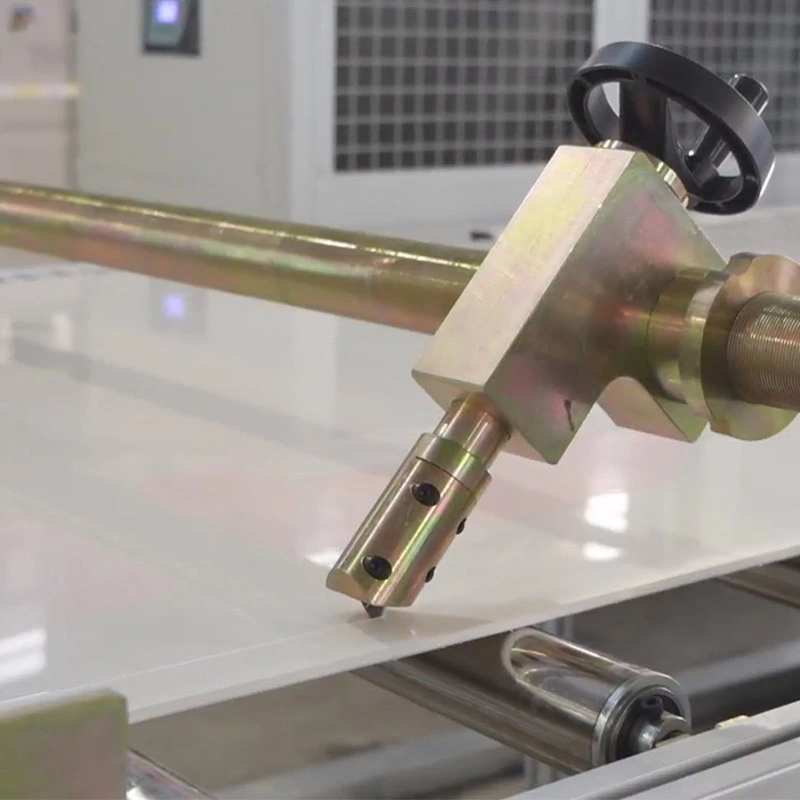
Start from the panel you intend to sell, then read back to the configuration. These four starting points cover most of the applications listed for this line.
A line quote is only as accurate as the board spec behind it. Send these five points and the configuration question answers itself.
Keep adjacent product options together for a faster catalog comparison.
High-speed PVC profile extrusion line for door and window sections, foam profiles and micro-foam sheet. Send the model and quantity for a quote.
View product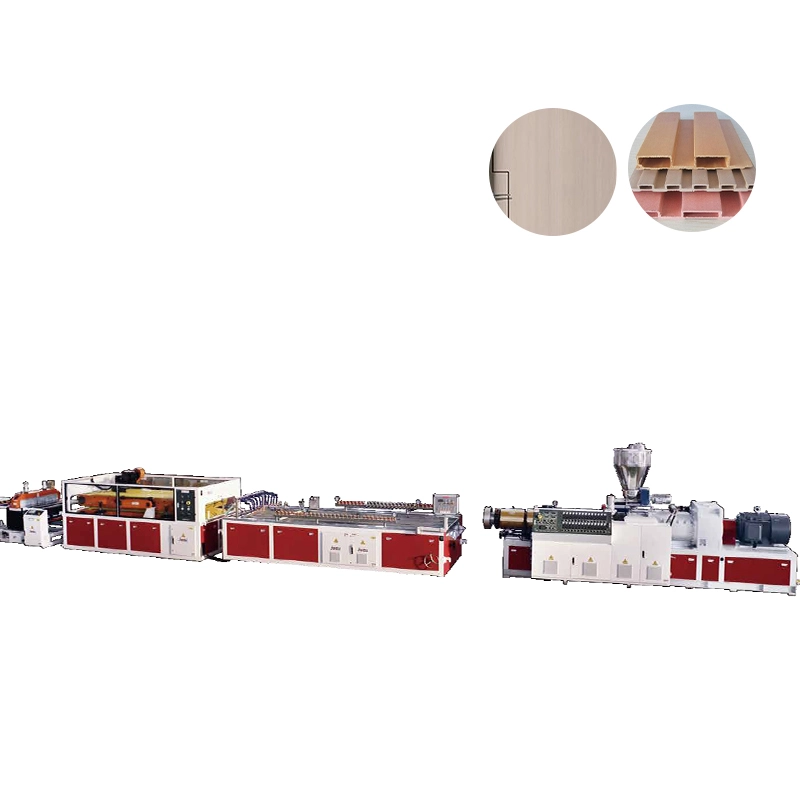
Conical twin-screw extrusion line for PVC and WPC door panels from 600 to 1250 mm wide, with matching calibration, haul-off, cutter and stacker.
View product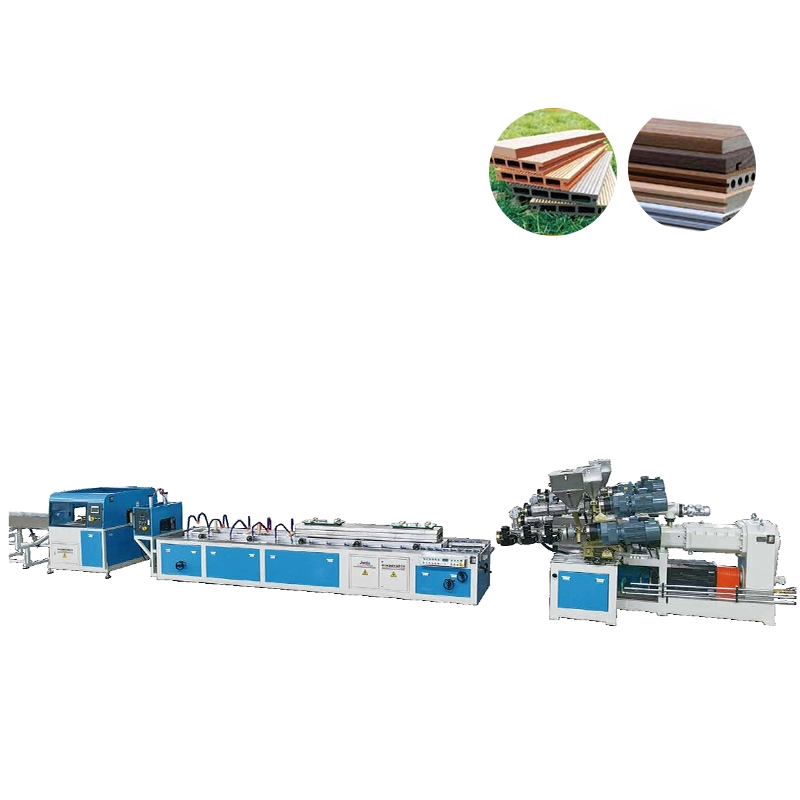
Profile extrusion line for PE and PP wood-plastic floors, decking, guardrails and pallets: three models, 120-300 kg/h, five-machine co-extrusion.
View productboth configurations produce boards from 1220 mm to 1600 mm wide and 3 mm to 30 mm thick, so the same line can cover thin packaging sheet and thicker construction panels.
the skinning line uses a single sjz80/156 extruder with a 75 kw main motor and runs at 300–400 kg/h. the co-extrusion line uses sjz65/132 and sjz80/156 extruders with 37 kw and 75 kw main motor power, reaching 400–500 kg/h.
the skinning foaming board line is rated at 300–400 kg/h, while the co-extrusion foamed board line is rated at 400–500 kg/h.
the skinning board's surface hardness is specified between crust foaming and free foaming, and that hardness is tied to end-use durability.
listed applications include building formwork, toy building block board, trays, packing boxes, container equipment, outdoor floors, sun rooms, indicators, turnover boxes, venue seats, billboards, lettering, bathroom partitions, decorative panels and car ceilings.
the line is offered with iso, ce, ul and tuv certification, backed by more than 40 years of developing experience and worldwide after-sales service from jwell.