Product Overview
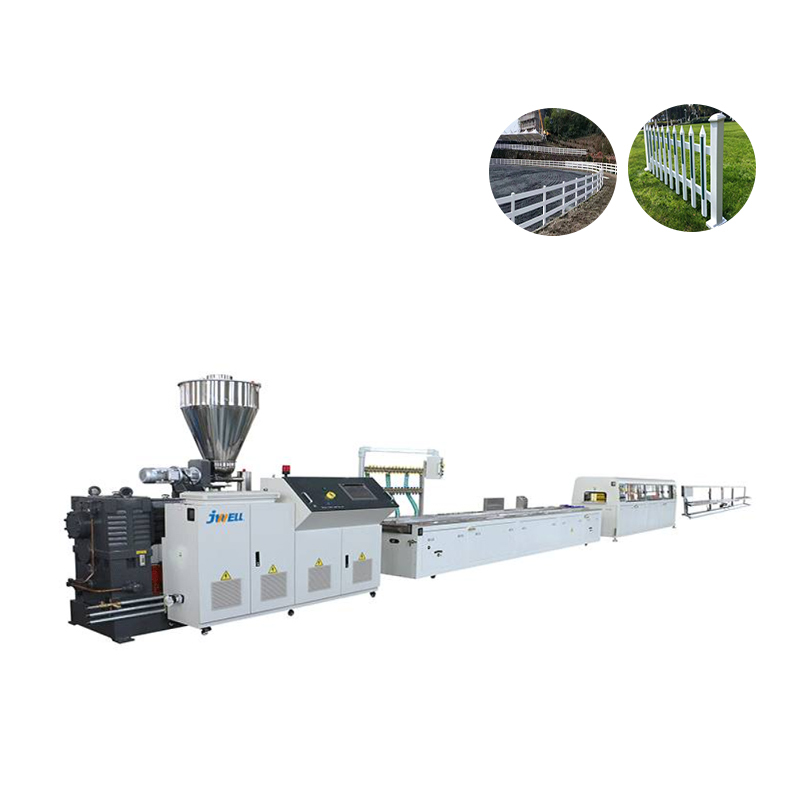
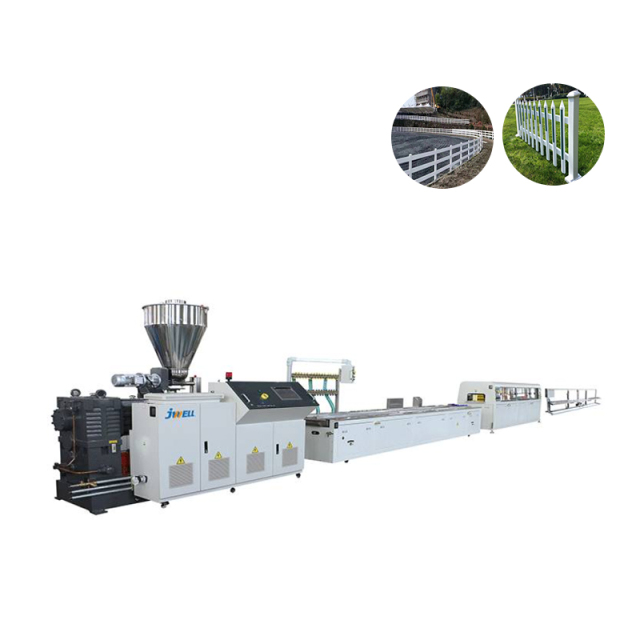
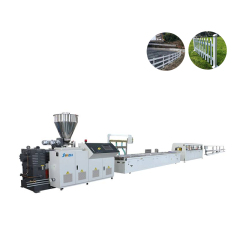
A PVC fence extrusion line turns dry-blend PVC compound into finished fence sections — posts, rails, pickets and panel profiles — in one continuous run. At its core the equipment is a PVC extrusion machine: a conical twin-screw extruder feeding a fence die, followed by the sizing, cooling, haul-off, cutting and stacking units that turn soft extrudate into a saleable length.
As plastic extrusion machine manufacturers, we supply each line as a working production unit rather than as separate machines to be matched on site. Everything downstream of the die is sized to the same throughput as the extruder, so the extrusion line machine behaves as one system rather than six. That matters most when a style changes: the settings that made one fence section run well carry over to the next with a mould change and a short settling period.
A fence section is a constant-section profile, which puts this equipment in the same family as any other PVC profile line — same screw platform, same calibration logic, different die. Die design and cooling practice carry across from one product to another, which is why a plant that already extrudes windows, door panels or trims can put a fence section on the floor without relearning the process.
Line Configuration and Process Flow
- Compound preparation — PVC resin, calcium carbonate and the additive package are blended to a uniform dry mix before the line starts. An even blend is the first thing that keeps a section consistent through a long shift.
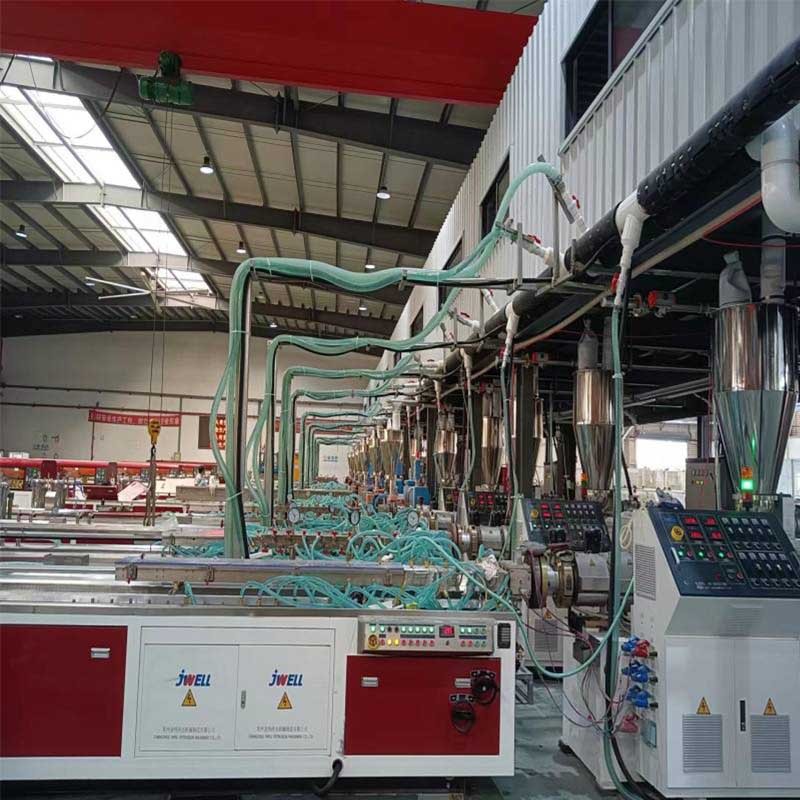
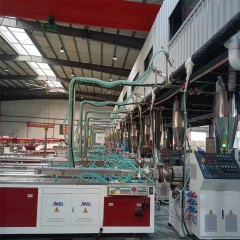
- Feeding — the dry blend is drawn from the stainless steel hopper into the barrel. A clean, corrosion-free feed path matters more than it sounds: a rusty spot in the hopper becomes a dark speck in a white fence.
- Plasticizing and extrusion — the conical twin screw melts, homogenises and pumps the compound through the die head. This is the heart of the PVC extrusion machine, and it decides how evenly the melt fills the die and how well the colour disperses.
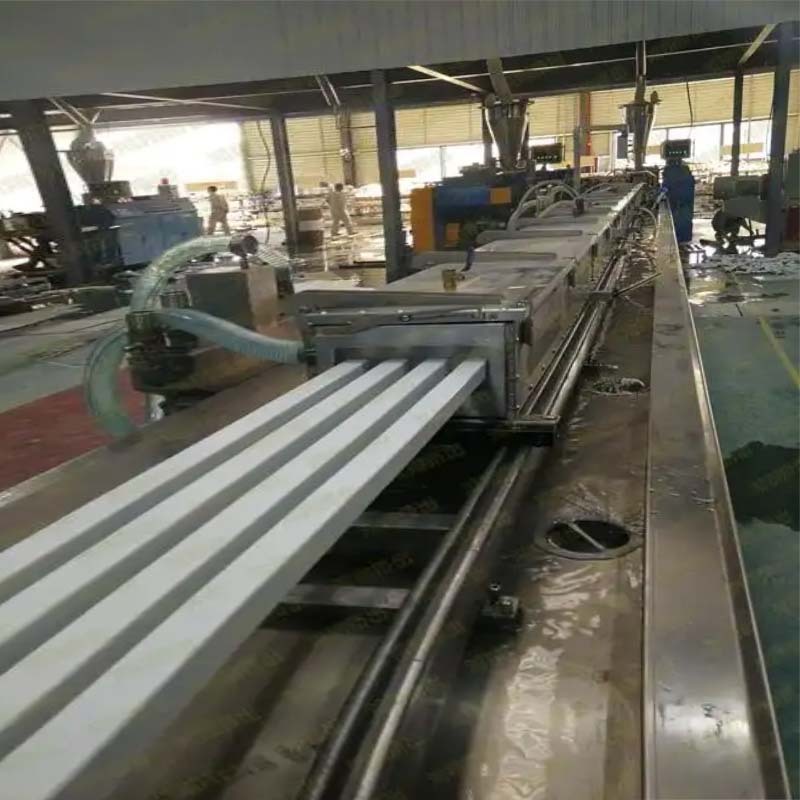
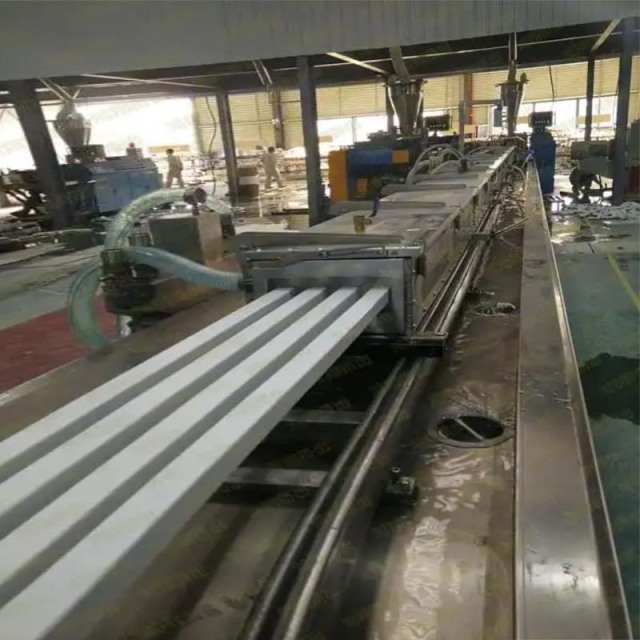
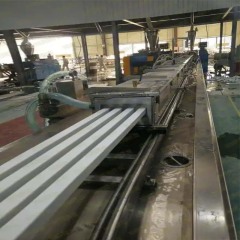
- Calibration and cooling — the hot profile runs into the calibrator and vacuum cooling tank, where it is held against the die shape while water carries the heat away. The final section is fixed here, not at the die.
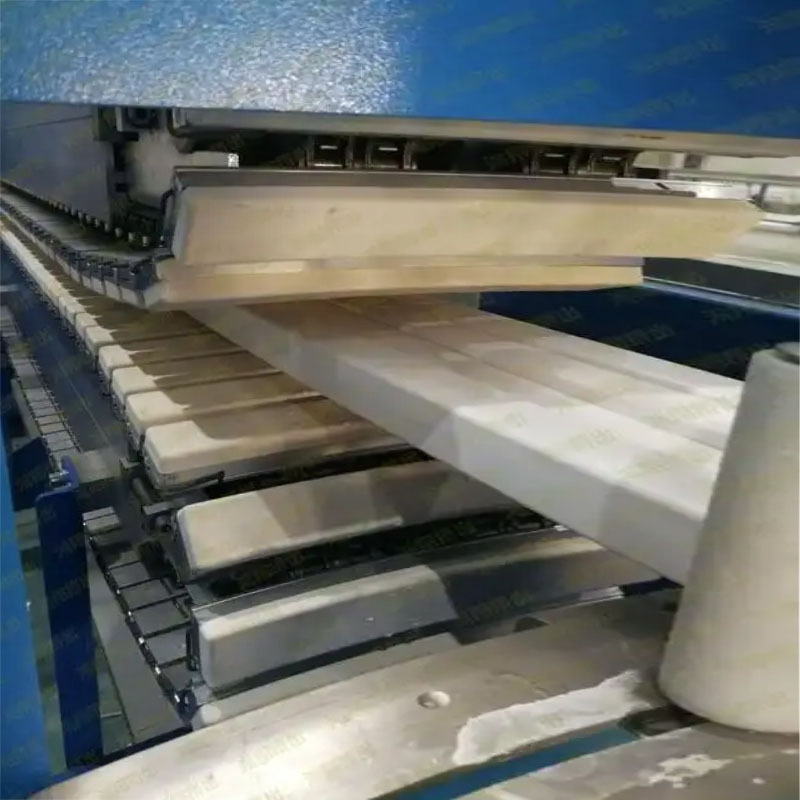
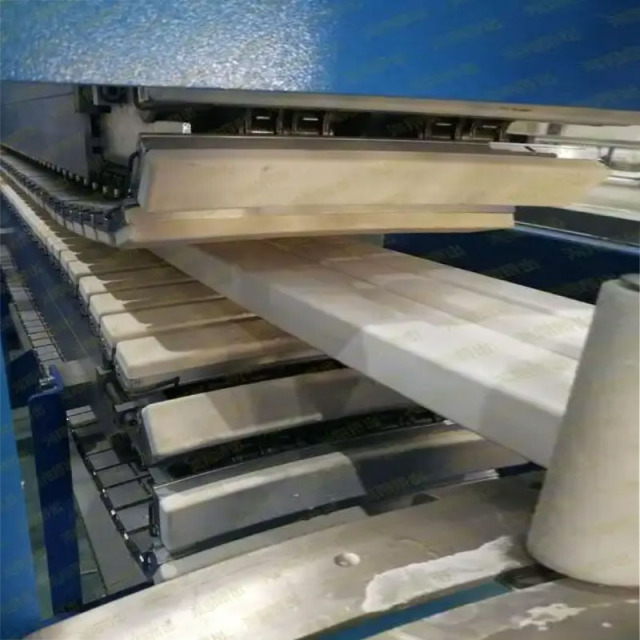
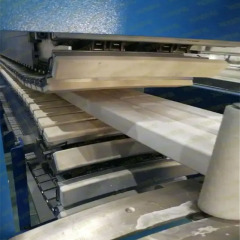
- Haul-off — the haul-off pulls at a speed synchronised with screw output. On any extrusion line machine this is the balance point that sets wall thickness, and it is the setting operators touch most often when a new profile starts.
- Cutting — a travelling cutter follows line speed and cuts to the length your packing or installation system expects, with square ends so panels butt cleanly.
- Stacking and recovery — finished lengths are stacked for packing, and trims or rejects can be crushed and milled back into the blend, which is where a fence plant recovers a good part of its scrap cost.
- Control and recipes — the touchscreen panel holds the temperature profile, screw speed and haul-off rate for each product, so a repeat order starts from a stored recipe rather than from an operator's memory.
Product Advantages
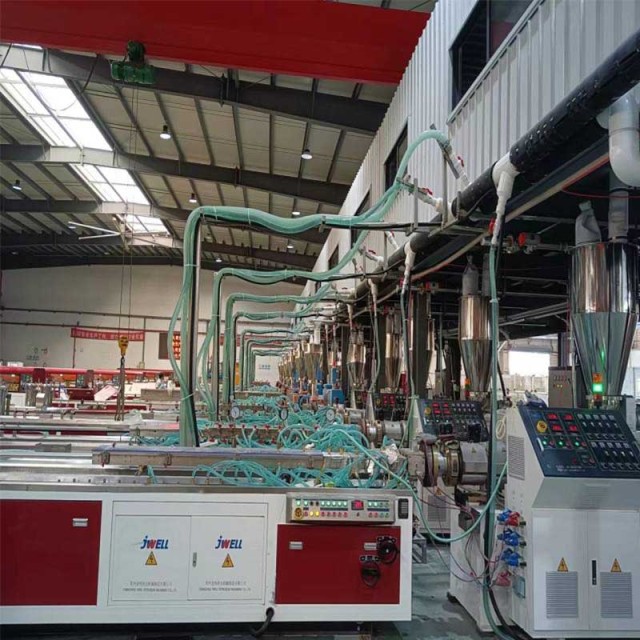
- Modular station layout. The extruder, die, cooling tank, haul-off, cutter and stacker are separate stations, so a fault stays inside one station and maintenance on the cutter does not disturb the extruder settings.
- Steady parameters, repeatable sections. Precision-machined screws and a control system built to hold temperature and screw speed give you the same wall thickness and weight per metre at the end of a shift as at the start.
- Flat, clean faces. Calibration and cooling are set around the visible face of the profile; because a fence is judged by eye at close range, a ripple or a dull patch becomes a rejected length at the packing station.
- Less rework per saleable metre. Steady output and even cooling cut the number of out-of-tolerance lengths, so more of the resin you buy leaves the plant as packed panels.
- Shared profile platform. The same plastic extrusion machine architecture runs our window, door panel and fence lines, so die and calibration practice is carried across products instead of being worked out again for each one.
- Downstream sized for fencing. The plastic fencing extrusion machine is matched to long, thin pickets and wide panels rather than short technical profiles, so haul-off grip, cooling length and cut-off suit sections that are awkward to pull and easy to mark.
- Familiar operation across the range. The control panel follows the same logic on every frame, so moving from one size to another, or from one fence style to the next, does not mean relearning the machine.
Profile Quality and Acceptance
- Section dimensions — measure the profile against the drawing at the same points every time: outside width, outside height and wall thickness at the positions marked on the drawing. Agree the tolerance band before the first production run, because it is set by the die and calibrator, not by the operator.
- Wall distribution — check the thick and thin sides of a hollow section. Uneven walls usually point to calibration or haul-off alignment rather than to the compound.
- Metre weight — weigh a fixed length from each shift. On a plastic extrusion machine it is the fastest sign that screw output, die and haul-off are still in balance, and it warns you before dimensions start to drift.
- Surface and colour — inspect the visible face under the same light every time. A fence is seen from a distance but judged close up, and gloss or colour variation across a run is the first thing installers complain about.
- Straightness and twist — lay a few lengths on a flat bed and sight along them. Bow and twist trace back to cooling and haul-off tension, and they are far cheaper to correct on the line than at the packing station.
- Cut length and squareness — check the cut face and the overall length against your packing specification. The cutter on an extrusion line machine follows line speed, so a change in haul-off rate is the usual reason a length starts running long or short.
- First-off approval — run a short batch, agree the sample with your QC team or your own customer, and keep it as the reference for the rest of the order and for repeat campaigns.
Fencing Applications
Fence producers supplying builders' merchants, landscaping contractors and property developers run long campaigns of one panel design and then switch. What the PVC extrusion machine has to deliver there is consistency: panels made in March have to match panels made in September, or the installer ends up sorting bundles on site. Steady colour, steady gloss and a straight edge are what keep a boundary contract profitable — and the same line covers the decorative garden side of the range, where pickets and low edging sell through garden centres and domestic outlets rather than through contractors.
Farm fencing is a different job: pasture delineation, livestock containment and long runs across open ground. Panels need to stay straight through sun, frost and wet, hold their colour, and stay light enough for one or two people to handle without machinery. Farm orders are seasonal, so the line is usually planned around peak months, with the quieter weeks used for caps, trims or other constant-section profiles.
Whatever the market, the finished product carries the sale. PVC fencing is waterproof, corrosion-resistant and weather-resistant, keeps its appearance over years outdoors with no painting, staining or sealing, and is light and straightforward to install. It resists UV degradation the way an outdoor panel has to, and it does so without the maintenance cycle that timber and galvanised steel demand — which is why buyers who once specified timber now specify PVC.
Specifications
Three frames make up the range, and they share the same centre height and the same downstream layout, so a plant can move up a size without re-laying the hall around it. What separates them is screw diameter and drive power — and with those, the tonnage each plastic extrusion machine can hold steadily across a full shift. SJZ55/110 The smallest frame, and the usual starting point for a producer entering fence manufacture or running several styles in modest batches where changeover time matters more than tonnage. Its lighter build makes it easier to place on an existing floor and to rig without heavy lifting gear, and its motor rating puts the smallest demand on your installed power. Picket panels, garden edging and lighter rails sit comfortably in its range; very wide or thick privacy sections belong on a larger frame. SJZ65/132 The middle frame is the one most buyers settle on when they want headroom without stepping up to the largest gearbox. It keeps the same centre height, so operators meet the same working level all the way down the line, and it leaves room for a longer production day, an extra shift or a second fence style without running the extruder flat out. Plants that expect to add tooling over the first two or three years usually choose this size. SJZ80/156 The largest frame, specified when fencing is the plant's main line rather than one product among several. The bigger screw and heavier drive let the plastic profile extrusion machine hold rate on wide, thick sections that would slow a smaller machine, and it is normally paired with the full downstream set. Producers running large project orders, or supplying distributors who order by the container, usually land here. Sizing works better backwards from your own figures than forwards from a brochure. Take your heaviest section, work out its weight per metre, multiply by the metres you need in a shift, and compare that figure with the output band for each frame. Leave a margin for start-up scrap, style changes and seasonal peaks — a line already at its ceiling on day one has nowhere to go in your busiest month. Send the profile drawing and the shift target and, as plastic extrusion machine manufacturers, we would rather confirm the frame from your numbers than sell you a size that does not fit.
| Item | SJZ55/110 | SJZ65/132 | SJZ80/156 |
|---|
| Screw type | Conical twin-screw | Conical twin-screw | Conical twin-screw |
| Screw speed (rpm) | 34.7 | 34.7 | 34.7 |
| Motor power (kW) | 22 | 37/30 | 55 |
| Output (kg/h) | 300-400 | 500-600 | 800-1200 |
| Center height (mm) | 1050 | 1050 | 1050 |
| Weight (kg) | 3500 | 4000 | 5500 |
| Typical production scale | Smaller fence ranges at lower tonnage | Mixed fence ranges at mid tonnage | Broad fence ranges at high tonnage |
Fence Styles and Mould Changeover
- The die decides the section. A picket, a rail, a post and a cap are four separate dies, each with its own calibrator, so a new fence design means new tooling rather than another line.
- Style coverage comes from the tooling. On a plastic fencing extrusion machine, full-privacy panels, spaced pickets, post-and-rail ranch fencing and low garden edging all run on the same frame once the matching mould is fitted.
- Small parts run on the same machine. Post caps and round fastener caps are produced alongside the panels with their own small dies, which keeps colour and surface finish consistent across a whole fence system.
- Changeover is a sequence, not a rebuild. Die head, calibrator, tank, haul-off and cutter are separate stations, so a style change is a planned set of swaps and settings, with the first-off sample checked before the line goes back to full rate.
- Hollow, solid and ribbed sections are all tooling decisions. Wall thickness and internal ribs are built into the die and calibrator; cooling length and haul-off grip are then set to suit the section.
- Moulds are quoted with the line.
- What we need for a new style: a dimensioned profile drawing or a physical sample of the fence section, the wall thickness, the colour or masterbatch, and the metres you expect per shift. From those the die and the frame size follow.
Ordering and Delivery
- Scope of supply. As PVC extrusion machine manufacturers we quote the line as a chain of units — extruder, die head, calibrator and cooling tank, haul-off, cutter and stacker — and confirm in writing what is included, so that upstream mixing equipment, extra dies or packing machinery are listed as separate items rather than assumed.
- Frame and die together. The die is made to the drawing you approve, so settle the profile, the colour and the frame size in the same conversation; a section change after approval means new tooling, not a tweak.
- Lead time. Ask your sales contact for the current lead time for the frame and the die together, and which of the two is the longer item in your case.
- Packing and shipping. Confirm the packing arrangement and the shipping terms with your sales contact. A frame of this size travels in sections and needs lifting equipment at the unloading point, so agree in advance who provides it.
- Payment and documents. The payment schedule, currency and the import documents supplied with the shipment are agreed with your sales contact and written into the order.
- Warranty. Ask for the warranty term in writing, along with what it covers — mechanical parts such as screw and barrel are usually treated separately from electrical components — and how a claim is handled in your country.
- Installation and training. Confirm whether engineer attendance at site is included, how many days it covers, who pays travel and accommodation, and settle operator training in the same conversation.
- Spares. As plastic extrusion machine manufacturers we can supply replacement calibration sleeves, cutter parts and heater bands to the original specification; agree an initial spares list at order stage and confirm the lead time for repeats.
Technical Support & Model Matching
Getting the configuration right starts well before the purchase order. Our engineers review your product drawing, the material you run and the output you need, then match the extruder, downstream units and control package to that brief — and say plainly when a standard build will not suit. Jwell has built extrusion equipment since 1997, with 500+ engineers, eight production bases and a service network reaching more than 120 countries. Installation and commissioning guidance, operator training, troubleshooting and spare-part supply continue long after the line is running.
Related lines from the same factory: PVC pelletizing extrusion line and recycled PP/PE deck board extrusion line, so a complete extrusion plant can be sourced in one place.
FAQ
What types of PVC fence can this line produce?
Panels, pickets, posts, rails and caps all come off the same machine, and what changes between them is the die and calibrator set. As a plastic fencing extrusion machine it is tooled for fence sections rather than generic profiles, so full-privacy panels, spaced pickets, post-and-rail ranch fencing and low garden edging are all within reach once the matching mould is fitted. Send us the section you intend to sell and we will match the die to it before the frame size is fixed.
What output can each model reach?
The three frames span roughly 300 kg/h on the smallest to 1200 kg/h on the largest, stepping up with screw diameter. Those figures are quoted for standard trial conditions on a given section; your own metres per shift depend on the weight per metre of the profile you run, so send us the drawing and we will work the number back to a shift output. As PVC extrusion machine manufacturers we would rather match the frame to your real product than to a headline figure.
How much operator involvement does the line need?
Once a recipe is loaded, the line runs with minimal manual intervention: the operator checks temperatures, haul-off speed and the first few lengths, then monitors. What takes skill is starting a new section and completing a changeover, not the steady-state run. Because the pvc profile extrusion machine stores each recipe on the control panel, a repeat order can be restarted by a shift operator rather than by the setup engineer, and training centres on reading the panel, checking weight per metre and spotting surface faults early.
Do you provide technical support and after-sales service internationally?
Yes. Installation and commissioning support, operator training and troubleshooting are available for lines running outside China, and requests are routed through your sales contact so the engineer who knows your configuration picks them up. Day-to-day support is usually a mix of remote diagnosis and scheduled site visits, and replacement parts are ordered against the original specification rather than re-measured on site.
What routine maintenance does the line need?
Day to day it is mostly checks: cooling water flow and temperature, haul-off belt tension, the cutter blade, and a clean calibrator at every start-up. The parts that wear are the screw and barrel, the calibration sleeves, the cutter blade, heater bands and seals — keep a small stock of the last three so a weekend failure does not stop production. Cleaning the die and calibrator between colour changes takes longer than any of the routine checks, which is why colour campaigns are usually planned in blocks rather than alternated daily.